

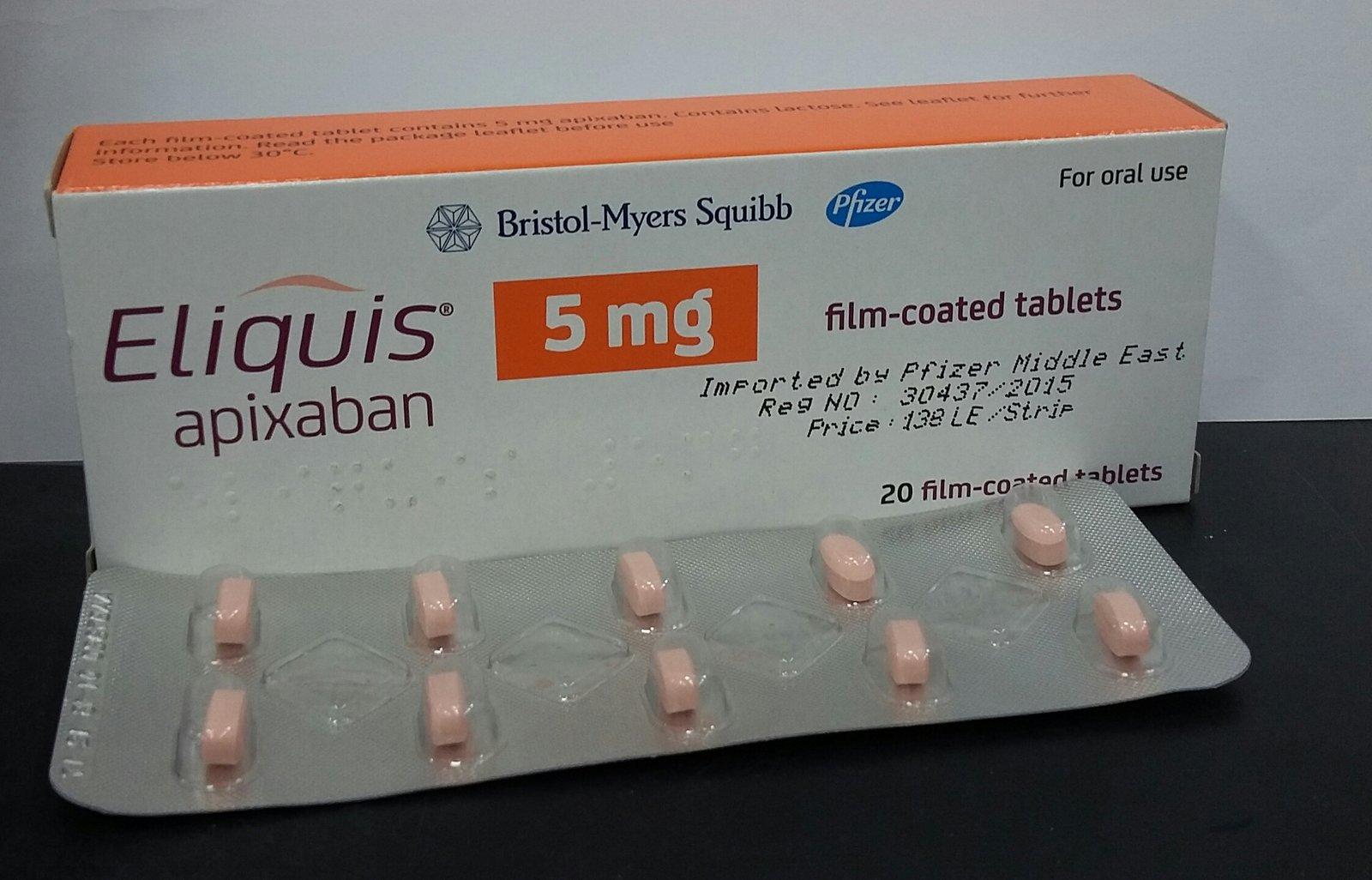

Eliquis (Apixaban) 5mg Tablets – Uses, Benefits, Safety, Dosage Guide and Patient Information
Eliquis (Apixaban) 5mg tablets are a prescription anticoagulant medication commonly referred to as a “blood thinner.” Doctors prescribe this medicine to help reduce the risk of dangerous blood clots and to lower the chance of stroke in certain heart conditions.
Blood clots can form inside blood vessels and block circulation. Anticoagulants like apixaban help prevent these serious complications by affecting the body’s clotting process.
What Is Apixaban?
Apixaban is the active ingredient in Eliquis. It works by targeting a specific clotting protein in the body called Factor Xa.
Why Factor Xa Matters
The body forms clots through a chain reaction involving clotting factors.
Apixaban blocks this step.
In simple terms:
Less Factor Xa activity → Less thrombin → Less clot formation.
Conditions Eliquis Is Commonly Prescribed For
1. Atrial Fibrillation (AFib)
AFib is an irregular heartbeat. Blood can pool inside the heart and form clots. These clots may travel to the brain and cause stroke.
Eliquis is commonly prescribed to:
-
Reduce stroke risk
-
Prevent clot formation in AFib patients
2. Deep Vein Thrombosis (DVT)
DVT occurs when a clot forms in deep veins, usually in the legs. Symptoms may include:
-
Swelling
-
Pain
-
Warmth in the leg
Eliquis helps prevent the clot from growing and reduces recurrence.
3. Pulmonary Embolism (PE)
If a clot travels to the lungs, it becomes a pulmonary embolism, a serious medical condition. Apixaban is used for treatment and prevention after initial care.
4. Post-Surgery Clot Prevention
After hip or knee replacement surgery, patients have a higher clot risk. Eliquis may be prescribed to prevent complications.
Benefits of Eliquis Compared to Older Blood Thinners
Older anticoagulants like warfarin required constant monitoring and diet restrictions. Apixaban improved convenience and consistency.
Advantages
-
No routine INR blood test (in most cases)
-
Fewer dietary limitations
-
Predictable dosing
-
Lower risk of certain bleeding complications
-
Fixed tablet dosage
How to Take Eliquis 5mg
Eliquis is usually taken twice daily as prescribed by a healthcare professional.
General guidance:
-
Take at the same times each day
-
Swallow tablet with water
-
Can be taken with or without food
Important Safety Information
Do NOT Take Without Medical Supervision
This is a prescription medication and requires physician guidance. Improper use may lead to serious complications.
Possible Side Effects
Like all anticoagulants, the most common risk is bleeding.
Mild Effects
-
Easy bruising
-
Minor nosebleeds
-
Gum bleeding
Serious Symptoms (Seek Immediate Care)
-
Black or bloody stool
-
Vomiting blood
-
Severe headache
-
Dizziness or weakness
-
Unusual heavy bleeding
Drug Interactions
-
Aspirin
-
NSAIDs (ibuprofen, naproxen)
-
Other anticoagulants
-
Some antifungal or antibiotic medications
Always inform a healthcare provider about all medicines and supplements being taken.
Who Should Use Caution
-
Liver disease
-
Kidney problems
-
Active bleeding disorders
-
Upcoming surgery
-
Pregnancy or breastfeeding
Why Consistency Is Important
Missing doses can allow clots to form.
Helpful tips:
-
Set reminders
-
Use pill organizers
-
Refill early
Lifestyle Considerations While Taking Eliquis
Avoid High-Risk Injury Activities
-
Avoid contact sports
-
Use protective gear
-
Be careful with sharp objects
Inform Healthcare Providers
Always tell:
-
Dentists
-
Surgeons
-
Emergency doctors
Diet and Eliquis
Storage Instructions
-
Store at room temperature
-
Keep away from moisture
-
Keep out of children’s reach
-
Do not use expired tablets
Frequently Asked Questions
Is Eliquis a blood thinner?
Yes. It reduces the blood’s ability to form harmful clots.
Can I stop it if I feel better?
No. You must follow medical advice. Stopping increases stroke risk.


Reviews
There are no reviews yet.